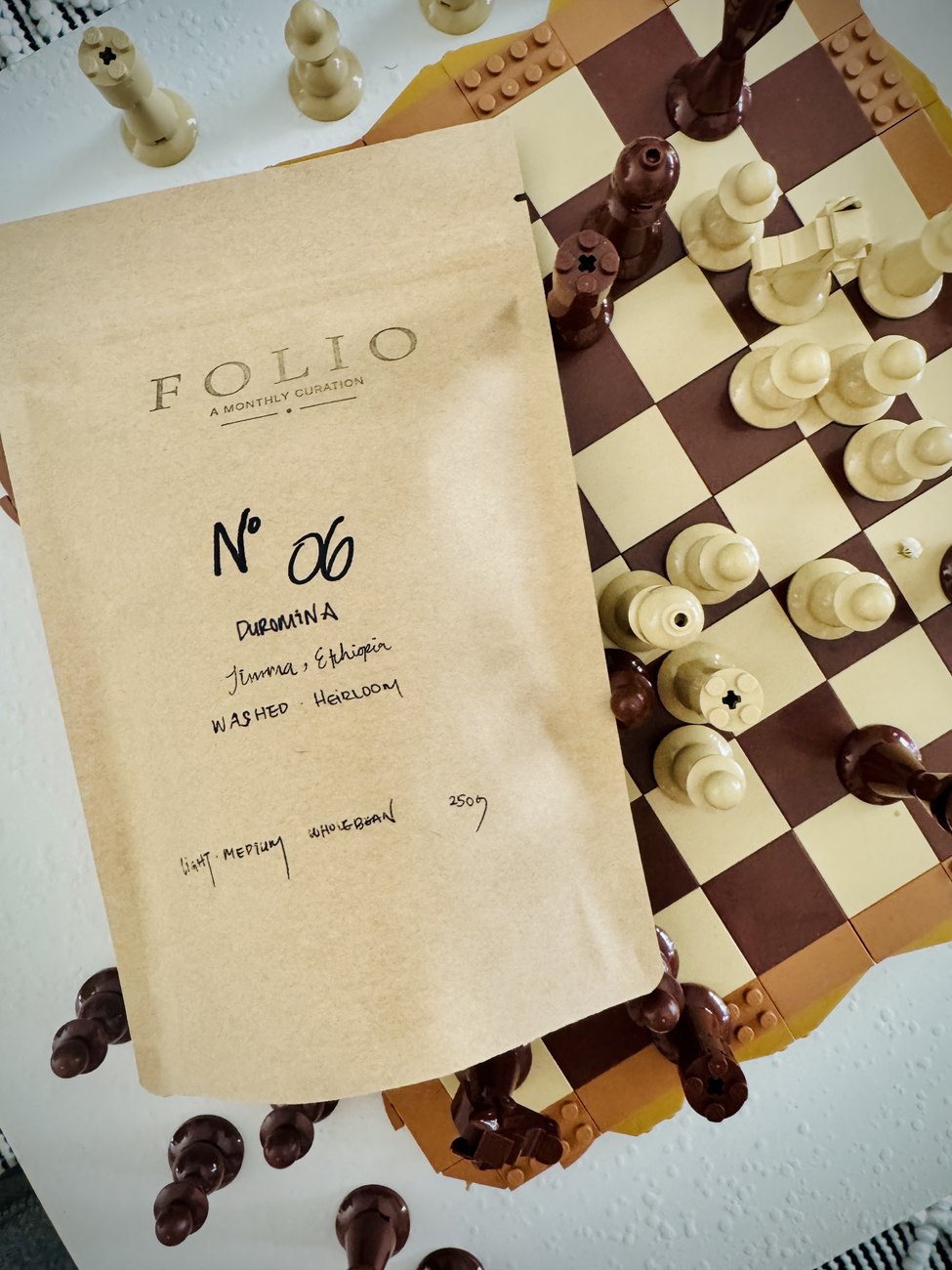
A rare Ethiopian variety, naturally processed, roasted light to keep the fruit loud.
Want it every month? Folio Reserve is $22 a month, shipping included. That is $8.95 less than one bag delivered.
Filter-first, though it pulls a bright, fruity espresso if you want to chase it. Best about a week past the roast date, when the fruit really opens up.
Wush Wush is a rare Ethiopian heirloom, named after the small town where it first grew. This lot came from smallholders and was naturally processed at a washing station in Guji. Loud fruit is the whole point.
A lot going on, in the best way. Melon and papaya up front, then cherry cordial, tangerine, and odd savory notes if you go looking: tobacco, barley, even a sun-dried-tomato thing that sounds wrong and tastes right.
Every bag is hand-stamped and numbered in the series. A QR on the back opens the full issue online: the story of the lot, how we roasted it, and a brew note. 250g, roasted fresh the week it ships.
A pour-over starting point for Nº 03. Go finer or hotter for more body, coarser for a cleaner cup, then dial it to your taste.
“Impressively smooth and delicious. I love that I get to try coffee from new and different places.”Elizabeth K.
“This coffee is spectacular! What kind of black magic did you use to do this?”Ash W.
“Rich caramel and butter. Tried it black, then as a cappuccino. The crema was insane.”Matthew G.
“Coffee was beautiful! Could taste the medium roast. 🫶”Priyanshi J.
One email when the next issue goes live. No weekly newsletter.
Honestly, the name stuck with us. Wush Wush. You say it out loud and you want to know what it tastes like. It sounds fun. Then we kept hearing it was one of those coffees that makes people stop and ask what they're drinking, a rare Ethiopian variety named after the town it comes from. Curiosity made us order and experiment with it. We ordered a small lot, naturally processed out of Guji, and roasted it light enough to keep the fruit intact. It delivered: ripe melon, papaya, a little cherry. Loud, but not messy. The kind of cup that reminds you coffee can taste like fruit you didn't expect. So here it is, Nº 03.
We taste a lot of samples and release one. Here is the path Nº 03 took, from the thing that made us order it to the profile we settled on.
The name, honestly. Wush Wush. Then we read up on it. Most Ethiopian coffee is sold as just "heirloom," because there is more coffee diversity around one village there than in some whole countries. This is the rare one that earned its own name.
A natural Grade 1 from smallholders around Chito, in Guji. Dry-fermented 96 hours, then dried slow on raised beds. A long ferment like that is a gamble: done badly it tastes like nail polish, done well you get the fruit this lot has.
We roasted it five ways over two weekends, moving the drop from first crack +45s to +2:00. The darkest one lost the tangerine and picked up a woody note we did not want.
We stopped it about a minute past first crack. Light enough to keep the fruit up front, not so light it goes thin and sour. Give it about a week off the roast date before you brew it. That is when the melon really shows up.
Your copy of every issue, held for you.
One 250g bag of every issue, $22 a month with shipping included. A single bag delivered is $30.95, so members save $8.95 a month, $107 a year, and go out first before the issue opens to everyone. Pause or cancel anytime.
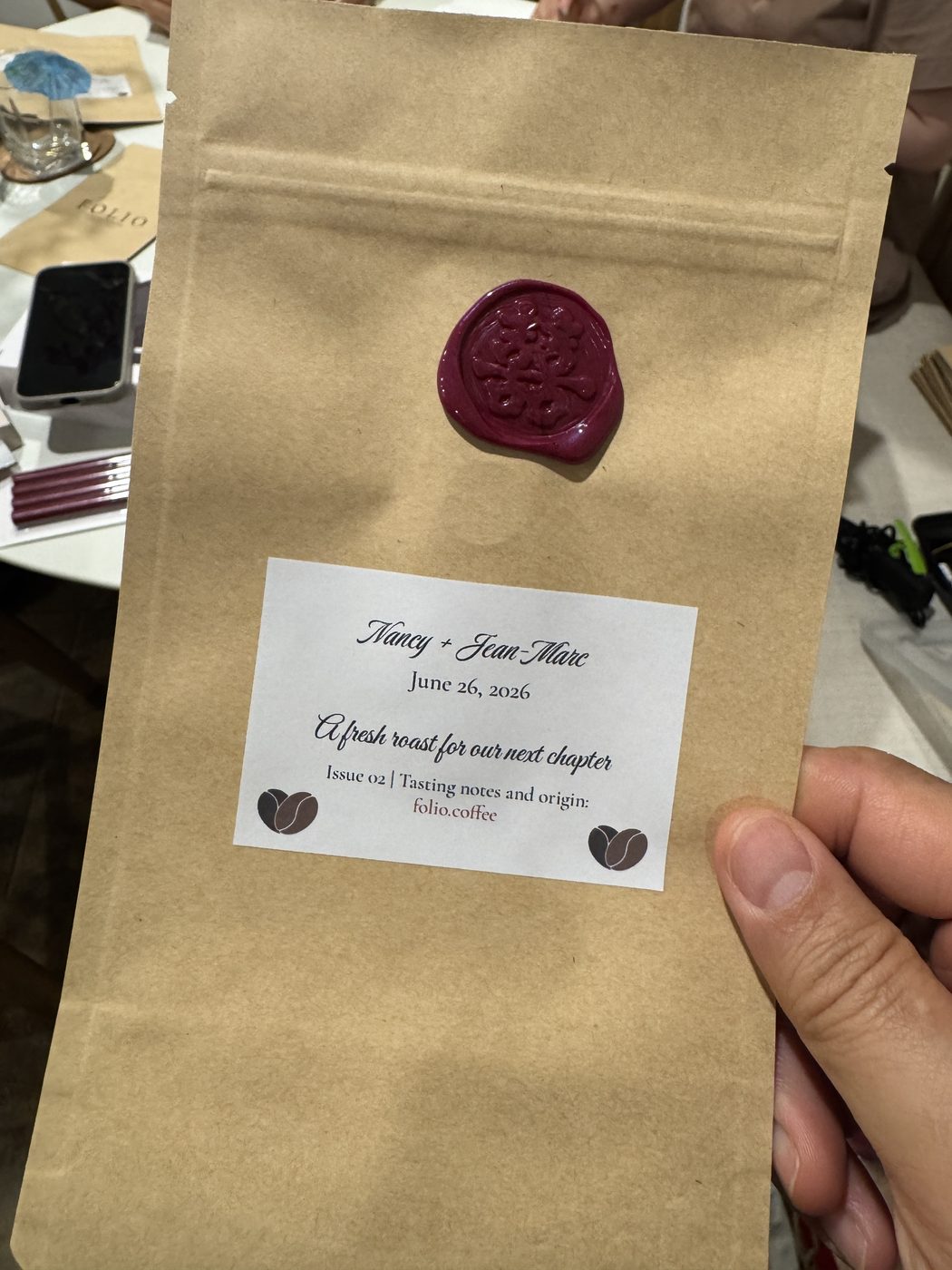
We can roast and personalize single-origin favors for yours, anywhere in the Bay Area. Pickup or shipped, personalized, and actually good coffee.
Explore favors & giftsFolio is the two of us, roasting in San Jose and bagging it together. One coffee a month, picked because we were curious about it. Roasted in small batches, and sent out with an essay that tells you why. That's the whole story. We'd rather do one thing well each month than fill a shelf you have to sort through.
Read the full story →